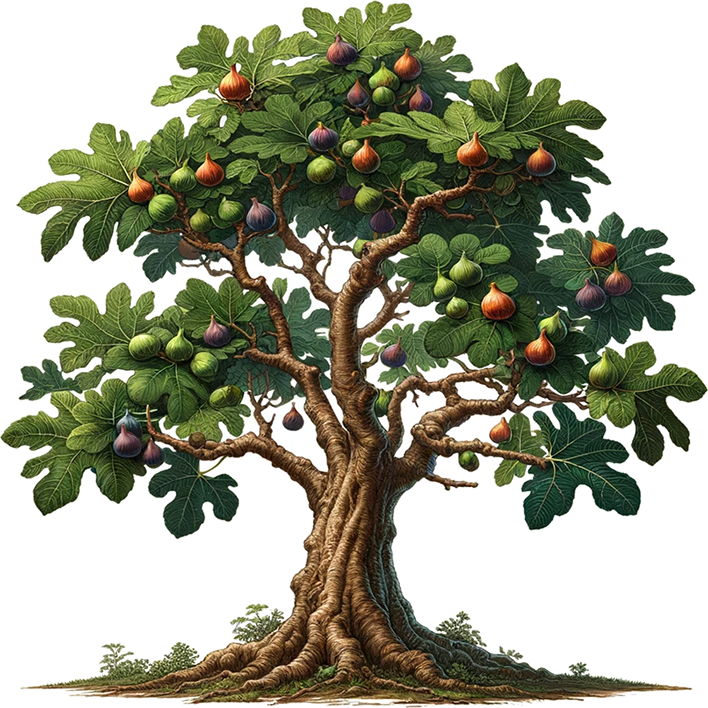
Treesy, A Manifesto for Mastering Complexity
1. The real problem: Digital chaos in a highly developed world
Companies have been digitizing for over 30 years.
And yet, in many corporations we still work as if it were 1998.
- Word templates
- Excel lists
- Form letters
- SharePoint folders
- Wikis with incomplete descriptions
- Procedure instructions that do not match the template
- Special cases that only "that one colleague" knows about
For example:
When an employee is hired today, an absurd ritual begins:
- You look for the template for the cover letter in a folder.
- The employment contract is somewhere else.
- Then you check the wiki to see which facilities belong to it.
- Then you check which additional agreements apply to which department.
- Then you manually delete passages that do not apply to this case.
- Then you calculate deadlines.
- Then you repeatedly enter the same name, the same entry date, the same data.
And you hope that you have not forgotten anything. And if a special case arises, the great search begins: who knows what this means? Why is it worded differently in the form than in the wiki? Does this rule still apply? Wasn't that changed three years ago?
This is not an isolated incident. This is everyday life. And, objectively speaking, it is a damning indictment of our digital maturity.
2. The root cause: Complexity without structure
Our world is complex. Businesses are complex. Rules are complex. Complexity isn't the problem.
The problem is that we don't manage it in a structured way.
Instead, we have:
- Isolated templates
- Isolated rules
- Isolated data
- Isolated islands of knowledge
Silos everywhere and nobody sees the bigger picture.
3. The radical change of perspective: Treesy
Treesy starts precisely here. Not with another template. Not with another tool. But with a completely different way of thinking.
We build complexity as a system.
The Planter creates a complete representation of a process. Not as text. Not as a folder structure. But as a logical, visual tree. On a large, freely movable surface, like in a building game: you zoom in, navigate with keyboard shortcuts, move, combine, and structure. Like in Command & Conquer. Like in Factorio. Like in Minecraft; only with corporate logic.
And this is precisely where something crucial happens: as you begin to analyze existing templates and build them in Treesy, all the inaccuracies suddenly come to light:
- Where is that actually defined?
- What happens in this special case?
- Why is it written differently here?
- Who really knows?
The system forces clarity. Not through pressure. But through structure.
4. The depth of the system
Treesy is not a simple modular tool. It is a complex, powerful system with:
- Email, data, document, upload, API, form, and table masters
- Table groups
- Rules
- Branching
- Variable logics
And all these building blocks can be combined.
Yes, you have to learn it. Yes, you have to understand it. But that's precisely the point: it doesn't feel like administration. It feels like building. And this building creates flow. Not theoretically. But in reality.
5. Forest & Climber: Radical simplification for end users
What is built in the Planter is published in the Forest. There, the end user sees no rules, no branching, no logic. He sees a starting card, just like a playing card. He clicks on it. And in the Climber, he is guided through the process through the questions that are relevant to his context.
Example:
- If he chooses full-time → no question about hours.
- If he selects part-time → the hours inquiry appears.
- If he selects a specific department → only the matching facilities are considered.
No deleting passages. No comparing templates. No wiki research.
In the end, he receives:
- Fully formulated documents
- Correctly populated with variables
- Perfectly laid out
- In the correct order
- As a package
- Optionally prepared as an email
- Including structured data storage reusable for subsequent processes
What used to take hours now takes minutes. What used to be error-prone is now consistent.
6. The real cultural lever
Companies possess two enormous resources:
- People with decades of knowledge
- Young, digital talents with enormous affinity for software
The knowledge of experienced people is valuable, but often not documented in a structured way.
Young people can use systems intuitively, but they run into Word templates and Excel hell.
Treesy creates a natural project approach here: those who build (planter users) analyze and model content. This raises questions. These questions are then clarified with experienced staff, not as a theoretical knowledge project, but during the actual building process.
In the process, something crucial happens almost incidentally: knowledge is extracted. Histories become visible. Obsolete practices are identified. Special cases are clearly defined.
And it is transferred into a structured system, as long as this knowledge still exists within the company.
This isn't generational romanticism. This is a strategic necessity.
7. Motivation as a driver of productivity
There's another aspect that hardly anyone talks about: working on large administrative projects is often brutally boring. I know this. I worked in exactly those kinds of environments for 30 years.
And I'll say it clearly: "Treesy is genuinely fun for the first time. Not in a marketing sense, but in a flow sense. You lose yourself in the structuring. You discover possible combinations. You optimize rules. You see how a system emerges from chaos. And suddenly, energy is generated. And energy is productivity."
8. Why this is bigger than a product
Many civilizations have failed not because of enemies, but because of complexity. When administration becomes unmanageable, when rules become opaque, when knowledge disintegrates, then a system loses its ability to function.
Treesy is a tool for managing precisely this complexity. Not by simplifying reality, but through intelligent structuring. And perhaps that is the real innovation: not fewer rules, but better tools.
9. The strategic outlook
Companies already have people who are ideally suited to clean up this chaos. They are digitally savvy. They are tech-savvy. They understand systems. When they see how processes work in organizations today, they won't remain silent.
They will ask: "WTF?! Why are you doing that?"
That's exactly where transformation begins.
Final Thoughts
Treesy is not just another tool.
It is a modular system for systematically managing organizational complexity.
It transforms:
- Isolated templates
- Fragmented knowledge
- Manual processes
into a living, logical system.
And it achieves something that has become rare in administrative environments: clarity, speed, and genuine enjoyment of structuring.
Treesy is thus changing not only how companies work, but also how they think.